The engagement between Dejah Thoris and Sab Than
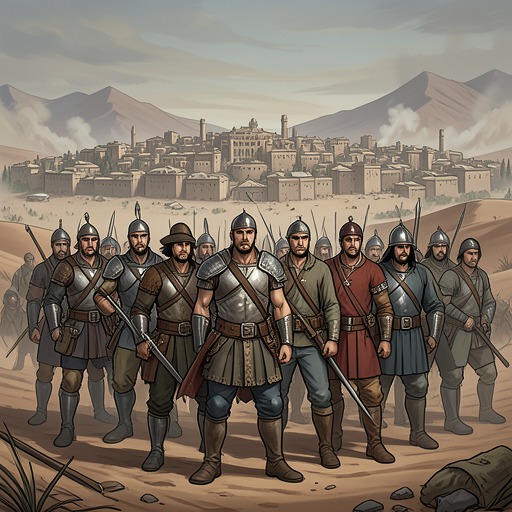
A Princess of MarsDejah Thoris’s promised marriage to Sab Than is at once a diplomatic offer intended to spare Helium further war and a binding commitment under Barsoomian custom. The pledge appears to bring peace within reach, but its force becomes painfully clear when John Carter returns: Dejah believes herself already married in every meaningful sense, even though the formal ceremony has not yet taken place. The resulting conflict links the fate of two peoples to a promise made under the shadow of military defeat.
The Pledge and Its Political Purpose
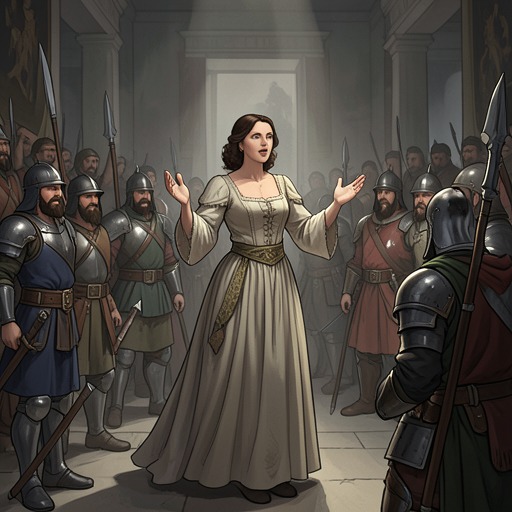
Dejah Thoris comes before Than Kosis with Sab Than beside her, reversing her earlier refusal. Two days before, she had told the ruler that she would prefer Tal Hajus, the Green Thark, to his son. Now she explains that she had not been sure of Sab Than’s love and has since become certain of it. She asks Than Kosis to forgive her former words and accepts that, when the time comes, she will marry the Prince of Zodanga.
The pledge offers Than Kosis a way to end the war without simply presenting peace as a concession. He welcomes Dejah’s decision, saying that he does not wish to prolong hostilities against Helium and will record the promise and issue a proclamation. Marriage would thus bind a personal alliance to a political settlement: the Princess of Helium’s future becomes part of the terms by which the enemy ruler hopes to end the conflict.
Dejah, however, insists that the proclamation wait until the war has ended. An announcement that she would give herself to Helium’s enemy while the fighting continued would look strange to both peoples. Her condition distinguishes the promise from an immediate surrender, but it also makes the union dependent on the outcome of the war. Sab Than presses his father to speak the word that will bring peace and hasten his happiness; Than Kosis answers only that he will offer peace and see how Helium responds. Dejah then leaves the chamber with her guards, leaving the diplomatic proposal unsettled.
A Promise That Outlasts the Ceremony
When John Carter encounters Dejah after returning from what she had believed was his death, her response establishes that the pledge is not, in her understanding, a provisional engagement. She mourns that he came too late: had he returned an hour earlier, she says, she would not have promised herself to the Zodangan prince. She had thought Carter buried in the Warhoon pits and had given her body to another in order to save her people from the curse of a victorious Zodangan army.
Dejah explains the difference between Barsoomian promise and ceremony. Her word has already made her as good as married; the later rites are formalities, not what gives the bond its certainty. She compares the force of the promise to the finality of death, which a funeral procession cannot reverse. Because she has pledged herself to Sab Than, she tells Carter that he can no longer call her his princess and is no longer her chieftain. The language turns political necessity into an intimate separation: Carter’s return changes what Dejah knows about his survival, but cannot undo what she has promised.
The scene also reveals that Dejah’s decision was made from loyalty to her people rather than from a change of heart toward Carter. She insists that she had not given her heart yesterday and another’s today. Believing Carter dead, she chose to offer herself to Sab Than to protect Helium from a victorious enemy. Her explanation separates the body she has pledged for political survival from the affection she says remains with Carter, while refusing to treat that distinction as a way out of the commitment.
Custom, Love, and the Cost of Ignorance
Carter proposes marriage and argues that his earlier failure to claim Dejah resulted from ignorance of Barsoomian customs. He had feared that asking would be presumptuous and unwelcome; Dejah tells him that, had he understood the custom, his claim could have been made months earlier. She says she would have given her empire for her Tharkian chief, even if doing so might have meant Helium’s fall. The contrast is stark: Dejah had been willing to sacrifice political security for Carter, while the pledge to Sab Than is her sacrifice of personal desire to save her people.
Yet neither declaration can erase the promise. Dejah says that she cannot belong to Carter while Sab Than lives. Carter answers that Sab Than will die, but she rejects even that solution: Barsoomian custom forbids her to marry the man who kills her husband, even in self-defense. Custom therefore blocks both a direct appeal to Dejah’s love and the violent removal of her rival. The exchange makes the pledge more than a temporary obstacle; it is a rule-bound bond with consequences that Carter’s courage cannot simply overpower.
Dejah’s farewell names what remains possible between them: shared sorrow and the memory of their brief days among the Tharks. She tells Carter to leave and never see her again, calling him the chieftain she once had. Their separation is not caused by uncertainty about their feelings, but by the collision of a prior promise, public duty, and custom. The pledge holds even when its emotional cost is fully exposed.
The Wedding Ceremony Interrupted
The promise proceeds toward its formal public consummation in Than Kosis’s palace. Carter sees a crowded audience chamber where the Zodangan ruler and his consort sit on diamond-encrusted golden thrones. A procession carries a golden chain, with a collar and padlock at each end, and the ornaments of a Zodangan prince and princess. The chain gives the impending marriage a visible form: the promise that Dejah described as already binding is about to be enacted before the court.
Sab Than is revealed as the first veiled figure. Than Kosis fastens a golden collar around his son’s neck; the second figure is then uncovered as Dejah Thoris. Carter recognizes that the ceremony is about to join her forever to the prince. To him, the splendid rites are a dreadful spectacle, and he breaks the great window, leaps into the assembly, and brings his sword down on the golden chain that would bind Dejah to another.
Sab Than attacks Carter with a jeweled dagger, but Carter restrains his wrist rather than killing him. The pledge’s consequences have therefore reached a public crisis: the marriage rite is physically interrupted, but the customary prohibition on killing a member of the opposite sex still governs Carter’s response. As he points his sword toward the far end of the hall, he cries that Zodanga has fallen. The scene leaves the political situation transformed while showing how close the marriage has come to formal completion—and how the promise’s personal and customary force cannot be reduced to the breaking of its golden symbol.
Significance
The pledge works on two levels that increasingly resist one another. For Than Kosis and Sab Than, Dejah’s promised marriage offers a route toward peace with Helium; for Dejah, it is a sacrifice made under the threat of her people’s defeat. For Carter, it is the consequence of returning after Dejah has acted on the belief that he is dead. The pledge’s power comes not from the ceremony alone but from the custom that treats her spoken commitment as already final.
The delayed wedding ceremony sharpens the distinction between a bond’s public display and its understood force. Before the court, the collars and chain would make the union visible; in Dejah’s account, the promise has already made it real. Carter can shatter the chain and interrupt the rite, but the larger conflict has been built from the prior pledge, the war it was meant to help end, and the rules that govern marriage and violence on Barsoom. The marriage promise is thus both a political instrument and the hinge of a private tragedy: an act of protection for Helium that separates Dejah from the man she says she loves.